By clicking “Accept All Cookies”, you agree to the storing of cookies on your device to enhance site navigation, analyze site usage, and assist in our marketing efforts. View our Privacy Policy for more information.
Programme

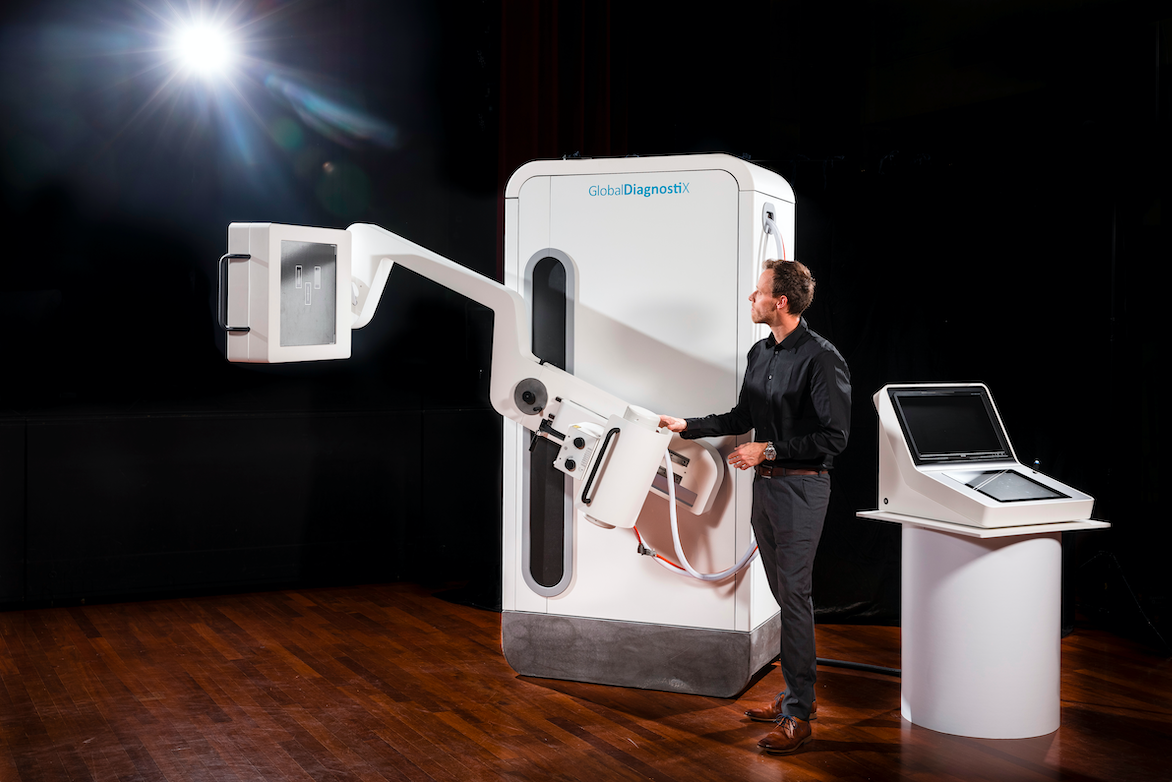
GlobalDiagnostiX

All-in-one system for universal access to radiology

According to the WHO, 2/3 people in the world do not have access to medical X-ray imaging technology. This means that people die from complications that could have been prevented with radiological tests to guide treatment. To help address this, we developed an all-in-one X-ray imaging system capable of bringing radiology technology to virtually any context.

The challenge: Imaging technology is unavailable or fails in low-income contexts

In low- and middle-income countries (LMICs) in Africa and elsewhere, lack of access to medical X-rays and other imaging tools can be attributed to a mismatch between existing technologies and the local context:

  • Lack of financial resources:

    o Radiology equipment is costly

    o Upkeep represents a high cost of ownership

    o Consumables (such as X-ray film) are needed to use equipment

  • Lack of quality infrastructure:

    o Poor supply chain makes it difficult to access consumables and spare parts

    o Poor power supply has a particularly high impact: up to 1/3 of equipment failures result from power surges, and low supply or outages may make it simply impossible to run equipment at all

  • Lack of trained personnel:

    o Trained personnel, such as medical radiology technologists, are needed to properly operate highly sophisticated and complex equipment

    o A severe shortage of radiologists in low-income and rural settings impacts the ability to read results

    o Trained personnel are also needed to maintain and repair equipment

  • Harsh climate:

    o X-ray equipment that is built for high-income contexts does not withstand heat, humidity and dust often present in LMICs

Our Adapted Solution: A robust, all-in-one digital X-ray imaging system

Through the GlobalDiagnostiX project, we worked in partnership with local actors to develop a digital, ultra-robust, and affordable medical X-ray system adapted to the needs and constraints of low- and middle-income countries. The solution:

  • Is extremely robust to withstand heat, humidity and dusty environments
  • Uses less power than traditional systems and manages power outages and strong fluctuations
  • Is designed as all-in-one system to be easy and safe to operate even with minimal training
  • Requires minimum maintenance and – as it is fully digital – no consumables
  • Enables teleradiology for centralized expert diagnostic interpretation where radiologists are not available locally
  • Is affordable, with an overall low cost of ownership, including purchasing, operating, maintenance and repairs for the entire product lifecycle

Project status

The GlobalDiagnostiX medical X-ray solution is being commercialized and deployed by Pristem SA and Opendiagnostics South Africa,

Find out more on Pristem and OpendiagnostiX websites

For more information, please contact Klaus Schönenberger or Solomzi Makohliso

Credits Main Image: HES-SO / Guillaume Perret

Projects
No items found.
Gallery
No items found.
Projects managers
No items found.
More projects

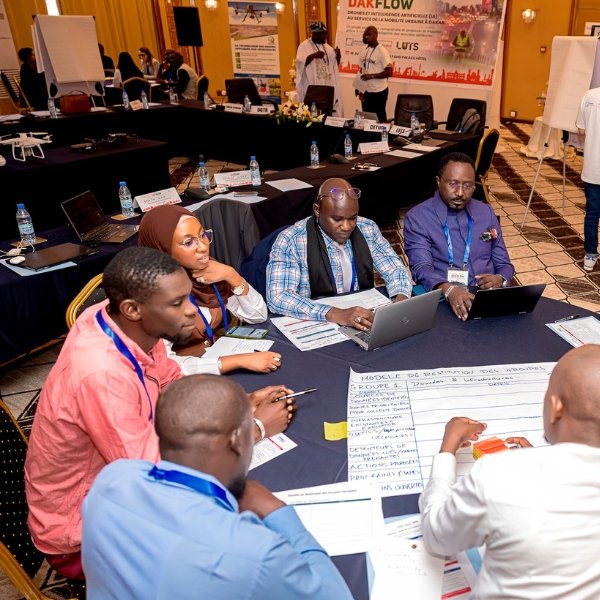
T4D DAKFLOW Drone-Based Traffic Monitoring

Drone and AI-based traffic data for smarter mobility planning in Dakar
Sustainable Development
Ongoing
Urban mobility Dakar, traffic congestion Dakar, sustainable urban mobility Africa, mobility data Senegal, AI mobility analytics, drone traffic monitoring, geospatial mobility data, data-driven urban planning, smart city Dakar, transport planning Senegal, congestion management Africa, multimodal traffic data, urban transport data integration, open mobility data platforms, inclusive urban mobility, road safety data analysis, CO2 emissions reduction cities, air quality urban transport, climate-resilient cities, digital urban infrastructure, smart mobility solutions, Global South urban innovation, evidence-based mobility planning, informal transport systems Africa, capacity building local institutions, SDG 11 sustainable cities, urban mobility innovation Global South
Topics

T4D Safer traditional houses

Building on tradition: Optimizing dry stone masonry for earthquake resistance in Pakistan
Sustainable Development
Ongoing
seismic resistant housing typologies earthquake construction, earthquake-resistant housing Pakistan, seismic resilience homes, safe housing solutions developing countries, affordable earthquake-resistant homes, sustainable construction Pakistan, low-cost resilient housing, seismic risk mitigation housing, local building materials construction, timber scarcity construction alternatives, reinforced adobe stone houses, resilient housing Global South, disaster-resilient architecture, community-based housing design, inclusive housing solutions, culturally adapted housing design, climate-resilient housing, housing reconstruction innovation, local capacity building construction, mason training earthquake-safe building, sustainable building materials, reduced timber construction methods, healthy housing conditions, ventilation and indoor comfort housing, post-disaster housing solutions, scalable housing models developing countries, housing resilience Nepal Afghanistan Peru
Topics

T4D Smarter mapping for recovery

Hyper-Localized GeoAI models for Post Disaster Assessments
Sustainable Development
Ongoing
geospatial artificial intelligence disaster management systems post-disaster damage assessment Nepal, flood and landslide risk Nepal, disaster risk management Nepal, GeoAI damage assessment, AI disaster response, drone mapping disaster assessment, building damage classification AI, geospatial data disaster response, rapid damage assessment tools, disaster recovery planning data-driven, climate disaster resilience Nepal, flood risk management Global South, landslide monitoring systems, AI for humanitarian response, localized AI models disaster assessment, human-in-the-loop AI validation, digital disaster management platforms, resilient reconstruction planning, emergency response coordination tools, data-driven disaster preparedness, community resilience disaster-prone regions, capacity building disaster management, inclusive damage data systems,
Topics